
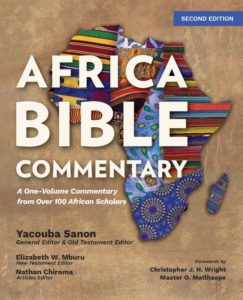
Book Giveaway
Enter to win a free copy of Africa Bible Commentary Second Edition by reposting our X post about the giveaway. Find us on X at @everyvoicekd.
About Africa Bible Commentary Second Edition
An interview with the Editors
EV: What is new about this second edition?
ABC: The revised edition of the Africa Bible Commentary (ABC) has been updated with additional material that is relevant to the church in Africa today. In the commentaries, more attention has been paid to the needs of students both in terms of introductory materials and exegesis.
Thus, this second edition of the ABC is more robust on the exegetical level and more relevant and up-to-date on the contextual level. All commentaries now begin with new, standardized introductions to enhance their usefulness to students. The articles, which are an important part of the ABC have also been updated and augmented with 75 new articles added.
EV: What led you to put this book together? What problem or issue(s) are you
seeking to address?
ABC: The first ABC was put together in 2006 out of the need to interpret and explain the Bible to the people in familiar language, using colloquial metaphors, African thought-forms and nuances, and practical applications that fitted the African context.
Africa has massively changed in the past 20 years. Technology and the internet is even more accessible and more affordable, and social media has begun part of the daily life of many Africans. Despite the dire predictions concerning COVID-19 in Africa, our continent has been spared the worst. Yet, terrorist attacks are more frequent and religious extremism is on the increase. Conflicts, social-political crises due to economic hardship, forced displacement of populations, youth migration to the West despite the enormous risks, are issues that continue to challenge the Church in Africa. These are just some of the issues that the second edition of the ABC addresses.
EV: What is the thesis of your book?
ABC: The main idea of the ABC is that the Word of God speaks relevantly to African contexts, and that African scholars are equipped to produce such a commentary on the 66 books of the Bible, respecting the authority and inspiration of the sacred writings and drawing inspiration from African realities.
EV: Who’s your target audience, and what are you most hoping they hear from it?
ABC: The target audience of the ABC is students in theological training, whether in Bible Schools, Seminaries, or even Christian universities that offer theological courses. We also hope that pastors and lay people will benefit from this resource. Ultimately, we believe that it is a useful resource in the classroom, the pulpit, and one’s personal life.
EV: Did you have any “aha” moments while editing the book?
ABC: During the editing process, there were indeed some “aha” moments. For instance, although we knew it already, it was amazing to show that every book of the Bible is relevant to Africa.
To see the writers’ commitment to make the Word of God relevant to believers while at the same time respecting the original biblical author’s intention brought us great joy.
EV: What was the most challenging part of the book project?
ABC: While we believe that interpretation is never neutral, one of the most challenging parts of the project was discovering how different writers engage their cultures. It was fascinating to see writers engage paths that were familiar to them, such as references to everyday life, African history, culture, worldview, proverbs, folktales, songs, and so forth, that we as editors would never have considered. It made us realize just how important it is to create these bridges to our cultures, while at the same time help the writers navigate them carefully so as not to let culture be the determinant of meaning.
EV: What kind of seminary/church classes should assign your book?
ABC: The ABC can be assigned to classes that focus on Introductory issues as well as more in-depth exegesis of particular biblical books.
EV: How is the ABC different from other commentaries out there?
ABC: In some ways, this commentary is quite similar to other commentaries. It helps readers understand the world behind the biblical text, that is, its history, geography, culture etc. It also provides a better grasp of the literary features, that is, the world of the text. One cannot read a biblical narrative (e.g. Exodus) in the same way as one reads a letter (e.g. Philippians).
Different types of books require different rules. However, where this commentary offers something unique, is its contextual interpretation. We wanted to provide a resource that would help readers “dig deeper” into the biblical text without ignoring the reality of their cultures. The world in front of the text, our contextual situatedness, is important for interpreting the Bible. Most importantly, we wanted to represent the intention of the biblical authors as accurately as possible without ignoring the questions that 21st century Christian Africans are asking. The first edition did this to a certain extent but we wanted to dig deeper and be more consistent.
EV: How do you think the ABC will influence how the global Christian community reads the Bible?
ABC: The reality is that the church is global. Unfortunately, we tend to focus on reading the Bible from only one or two contexts, generally the Minority World. The end result is that it is the church that suffers. The ABC provides a different perspective, one that is both biblical and contextual by being faithful to the Word and relevant to the World. We believe that if everyone is allowed to have a voice, the multidimensional nature of Christianity will be realized. At the same time, we believe that traditionally accepted ways of reading from the Minority World should not be discarded. What we hope for is complementarity. Africans ask questions of the text that someone from a different context might not and vice versa. What this means for the global Christian community is that we will have the opportunity to interrogate our own assumptions as well as discover our blind spots. Hopefully, that will produce a more balanced reading of the biblical text.
About the Editors

Yacouba Sanon (PhD, Trinity Evangelical Divinity School) is the Hebrew and OT scholar at the University of the Christian Alliance of Abidjan, Côte d’ Ivoire. He grew up in Burkina Faso and has many years of experience as a pastor as well as in community development. He has taught and researched various areas of theology, including narrative theology.
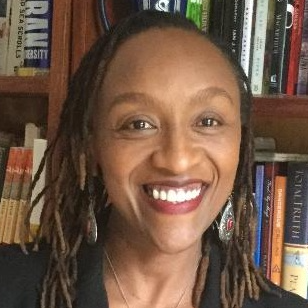
Elizabeth W. Mburu (PhD, Southeastern Baptist Theological Seminary) is an associate professor of New Testament and Greek at Africa International University, Kenya. She is also the Langham Literature regional coordinator for Anglophone Africa.
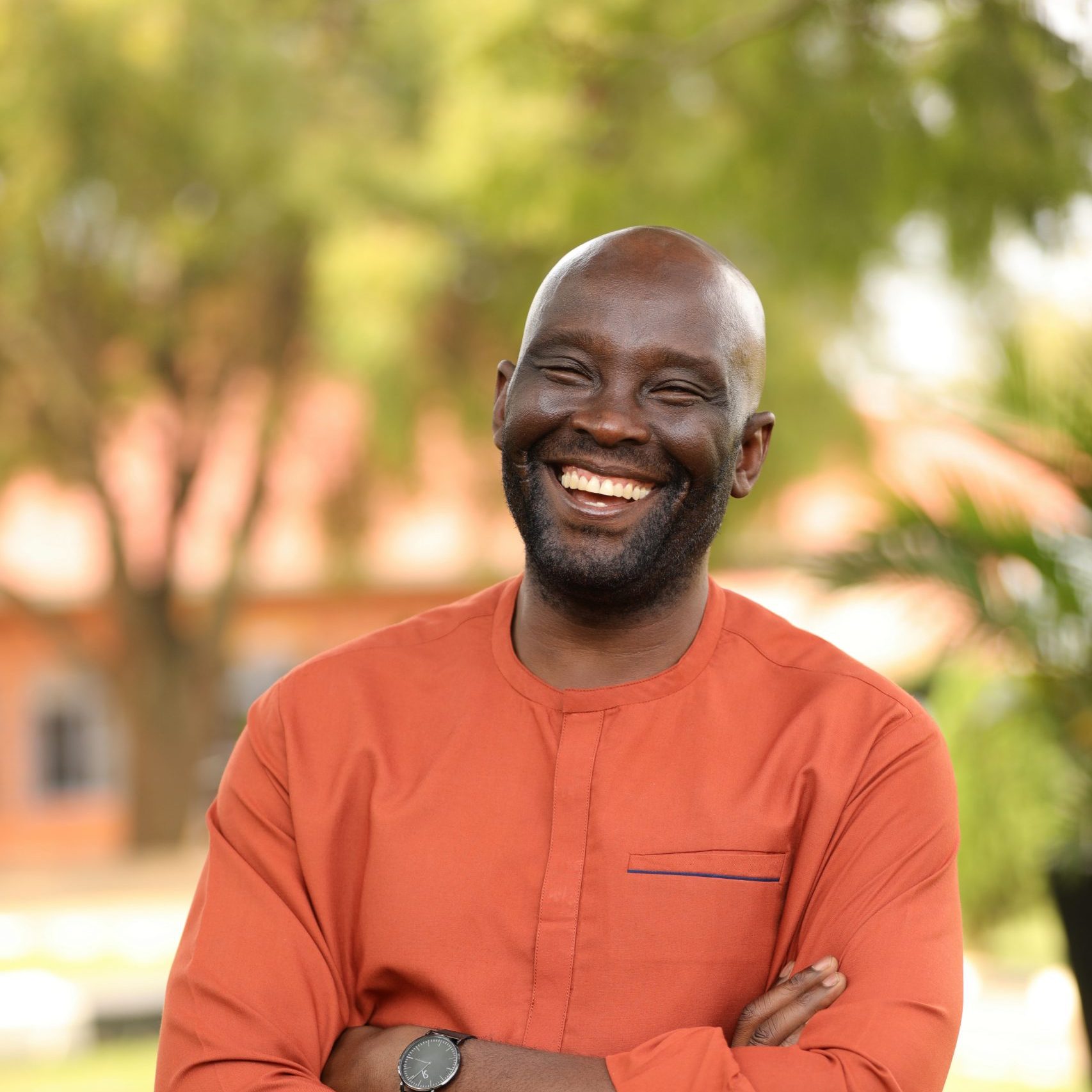
Nathan Chiroma (PhD, Stellenbosch University) is the principal of Africa College of Theology, Kigali, Rwanda.